STELVIO PASS
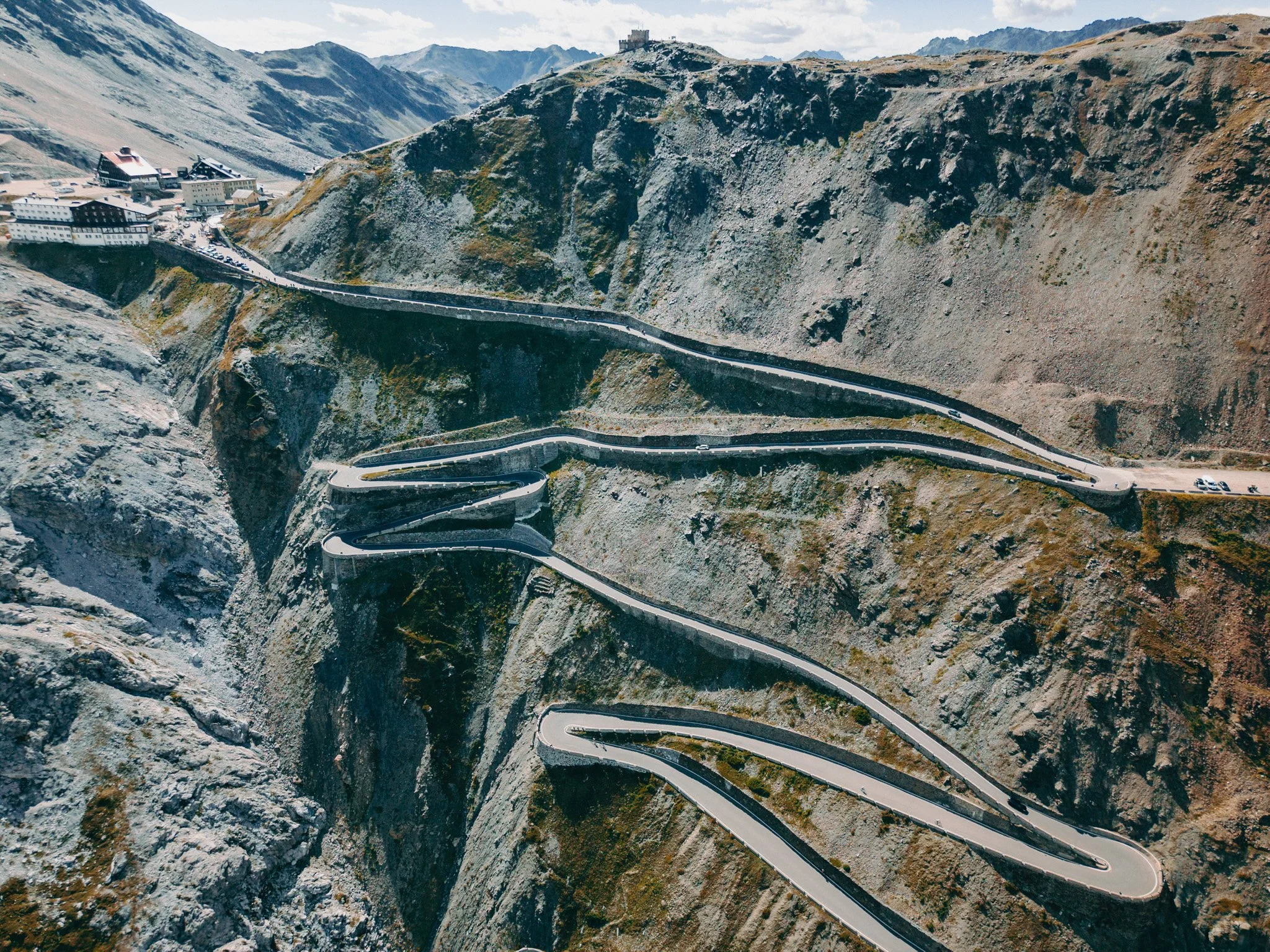
Hairpins on the Stelvio Pass.
Some climbs you ride once, tick them off the list and move on to the next one.
The Stelvio is different.
This was already my third time riding the Stelvio, and I still wanted to come back. For me, it is simply one of those unique mountains that should be on every cyclist's bucket list. It has the history, the famous hairpins, the altitude and, most importantly, some spectacular views.
For this ride, we started in Prato and climbed the famous Italian side of the Stelvio. Instead of turning around at the summit, we descended via the Umbrail Pass into Switzerland and made a loop back to Prato.
The route
Start/finish: Prato allo Stelvio, Italy
Distance: 67.02 km
Elevation: 1,963 m
Highest point: Passo dello Stelvio — 2,757 m
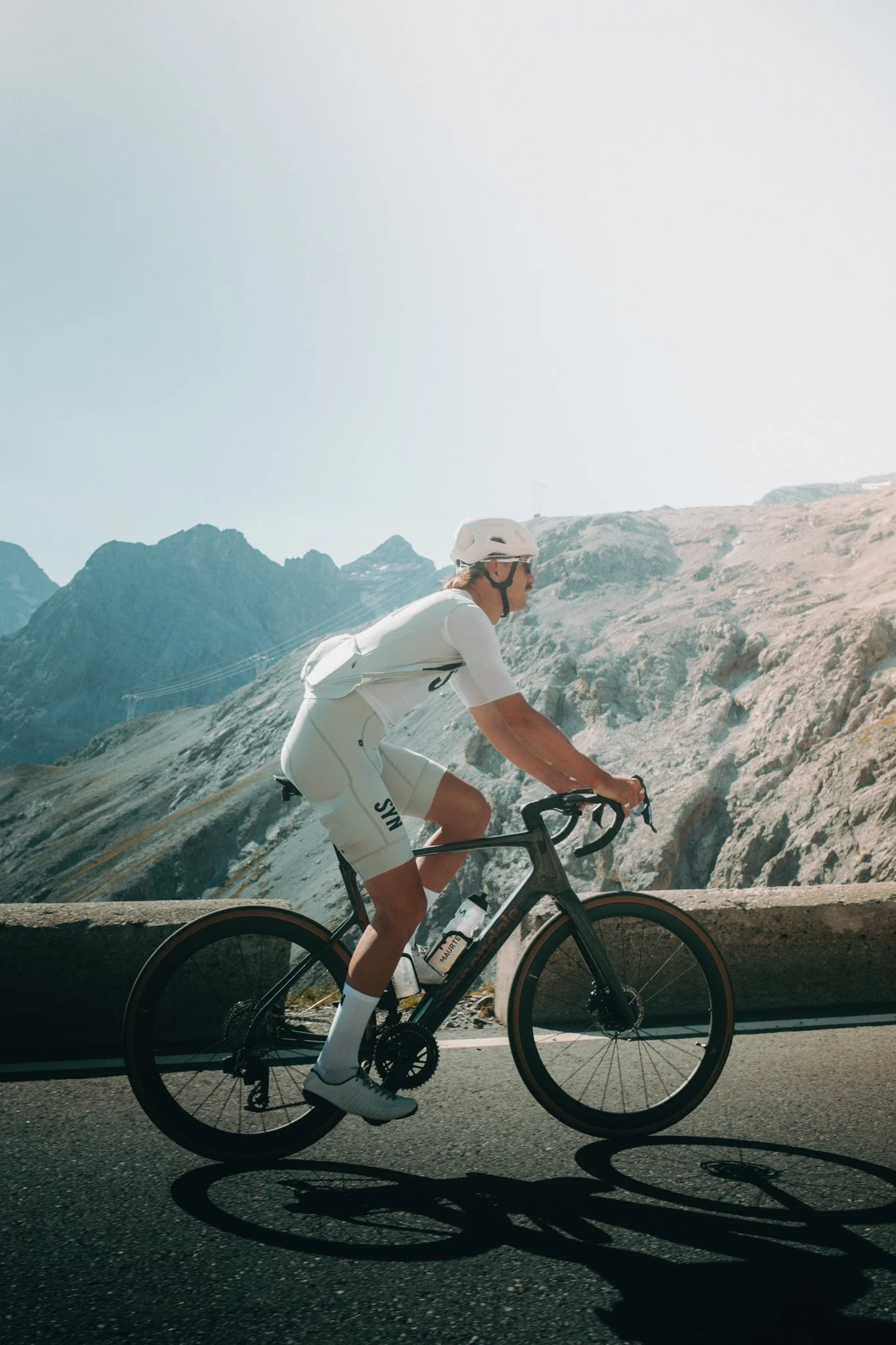
Bike: Cannondale Synapse 2
Route: Prato → Passo dello Stelvio → Umbrail Pass → Switzerland → Prato
The classic climb from Prato to Passo dello Stelvio is around 25 kilometres long with approximately 1,838 metres of elevation gain. Along the way you tackle the 48 hairpins that have made this side of the Stelvio so famous. (suedtirol.info)
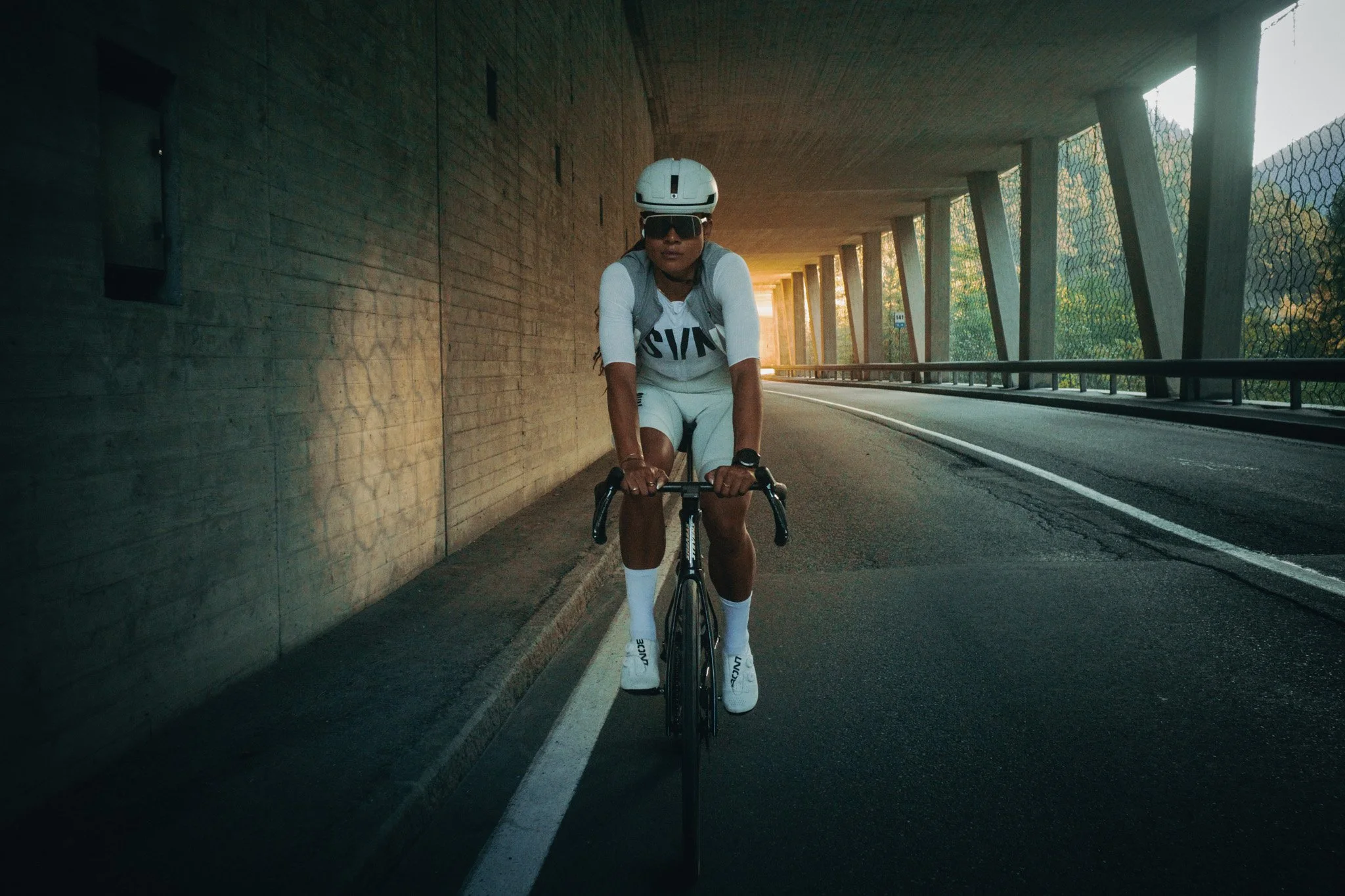
Early on the Stelvio
Starting early from Prato
We stayed at a campsite in Prato, which meant we could start the ride directly from the bottom of the mountain. We left at around 07:00. If you're planning to ride Stelvio yourself, I think starting early is one of the best things you can do.
The road was still relatively quiet and the sun wasn't too high yet. It also gives you beautiful morning light as you look further into the valley and towards the mountains.
We started easy.
We knew exactly what was ahead of us and there was no point in going too hard in the first kilometres.
This is going to be a long climb.
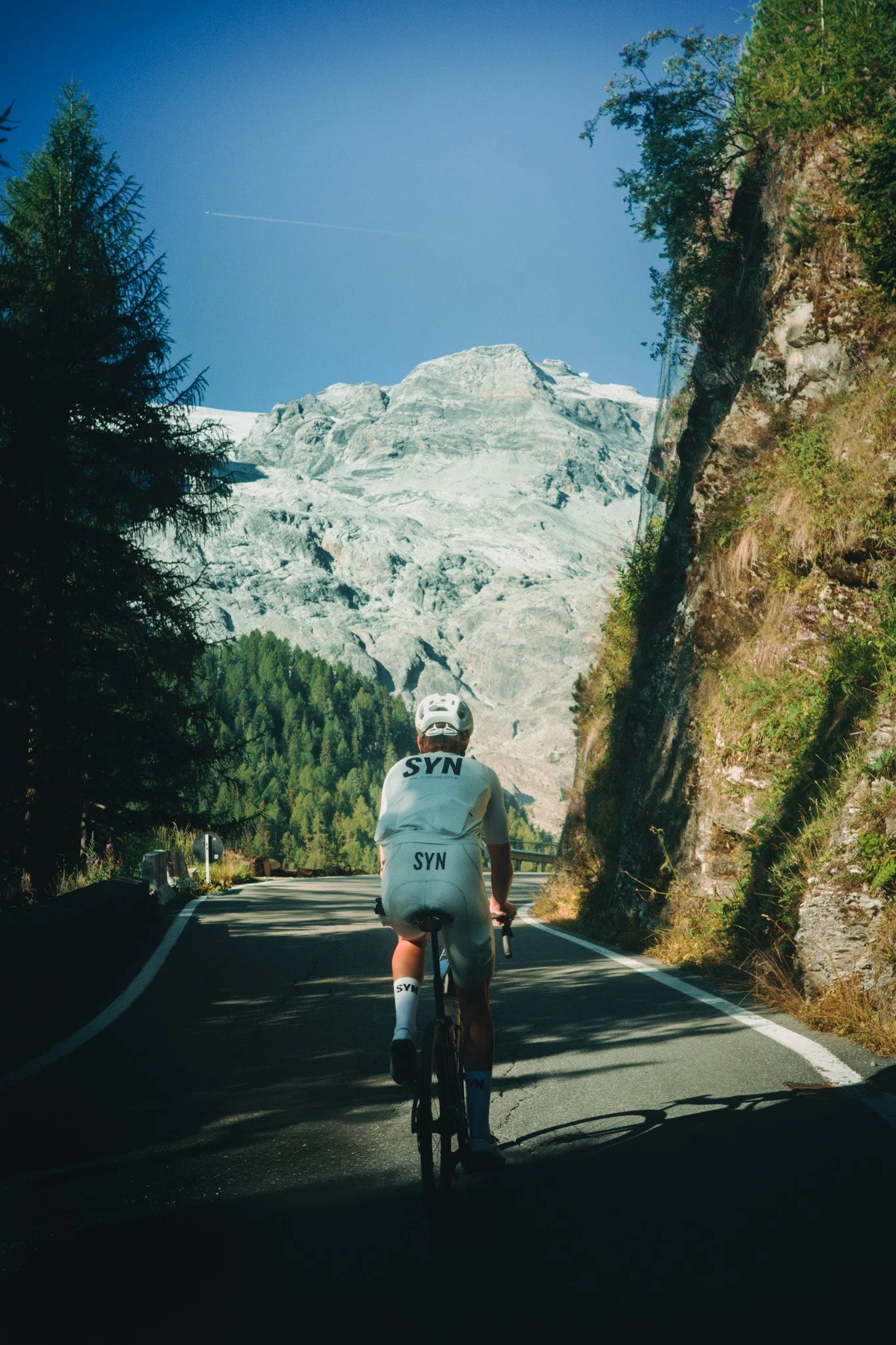
The first kilometres
The first part from Prato isn't too bad. The roads are relatively long and straight and, to be honest, this isn't yet the spectacular Stelvio you see in all the famous photographs. But you are gradually making your way further up the valley. Especially early in the morning, this is beautiful in its own way. You can look ahead into the mountains and get a feeling for where you're going. And slowly, the road begins to change.
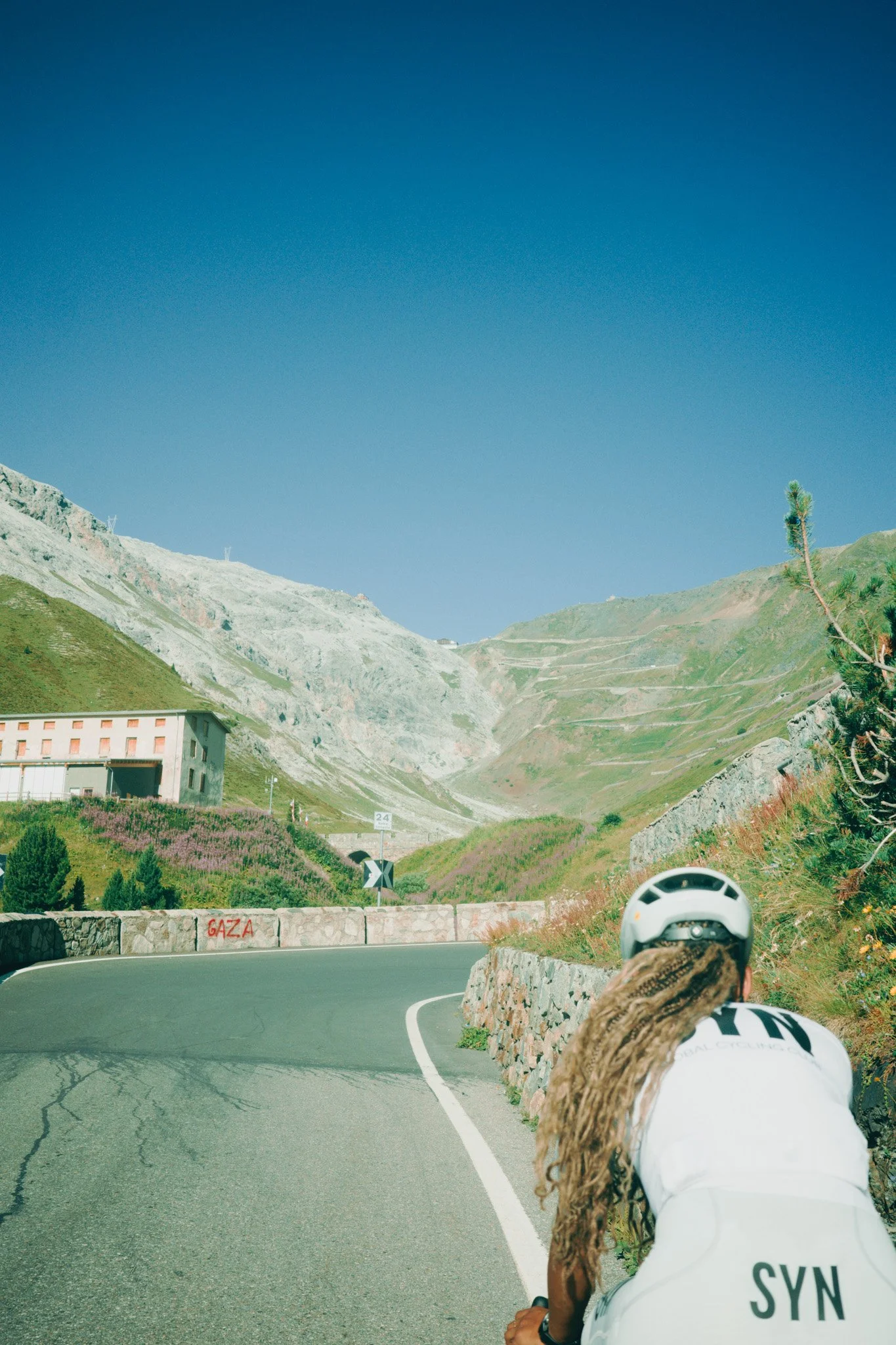
Then you see the hairpins
At some point, you start seeing the famous Stelvio hairpins. That's when it really becomes impressive. The strange thing is that by this point it already feels like you've done a lot of climbing. But there is still so much ahead of you. The road starts twisting its way higher and higher up the mountain and suddenly you get those views you know from all the pictures of Stelvio. And yes, they are just as impressive when you're actually riding them.
We were lucky enough to pick a beautiful sunny day, so the mountains around us were completely visible. At some point I looked at the altitude on my bike computer and saw that we were already at around 2,300 metres. Then you realise the summit is at 2,757 metres. There's still more than 400 vertical metres to go. That's the moment when you really understand how long the Stelvio is.
The final hairpins
The higher you get, the more spectacular it becomes. The mountains surrounding you feel unique, and everywhere I looked I wanted to take another photo or video.
Then you look back down.
You can see the road twisting below you, with hairpin after hairpin stacked on top of each other.
There are 48 hairpins between Prato and the summit, and they are what make this side of the Stelvio so iconic. The road was originally constructed in the 19th century, and the climb later became part of cycling history through races such as the Giro d'Italia.
Even though this was my third time here, that view was still special.
The Stelvio is one of those climbs where the difficulty and the scenery work together. It is hard and incredibly long, but there is always something around you that makes you want to keep going.
Reaching 2,757 metres
Finally, you reach the top.
Passo dello Stelvio sits at 2,757 metres, making it Italy's highest road pass. But arriving at the summit is also a slightly strange experience.
For most of the climb, you're surrounded by huge mountains and incredible nature. At times you feel like you're somewhere in the middle of nowhere. Then you reach the top. Suddenly there are lots of people.
There are places selling hotdogs, cycling merchandise, souvenirs and food. After the peaceful feeling of the mountain, the summit almost feels like a tourist hotspot.
But after climbing Stelvio, we weren't complaining about the food. We took a long break, ordered coffee and pizza and took the obligatory pictures at the Stelvio sign.
Down the Umbrail
If you only want to ride Stelvio and don't want to turn it into a much bigger mountain ride, I think making the loop via Umbrail is a really nice option. Instead of turning around and riding back down the same 48 hairpins, we continued towards the Umbrail Pass and Switzerland. The descent towards Umbrail is beautiful, with spectacular mountain views.
We stopped briefly at the Umbrail Pass itself, and it was noticeably quieter than Stelvio. After the crowds and shops at the Stelvio summit, Umbrail felt much calmer.
Then came one of the rewards for all that climbing. A very, very long descent.
Down through Switzerland
Further down Umbrail, the roads become smaller and are really fun to descend. After spending so much time climbing, it feels amazing to finally let the bike run. And because Stelvio is such a long climb, you get a long descent in return.
Eventually the route crosses back into Italy. From there you're riding on a bigger main road. The gradient becomes less steep, so you have to start pedalling a little more again, but you're still gradually losing elevation almost all the way back to Prato.
Eventually we rolled straight back to the campsite where we'd started that morning. 67.02 kilometres and 1,963 metres of climbing.
Not an enormous day when you look purely at the distance. But the kilometres don't really tell the story here.
What should you know before riding Stelvio?
If it's your first time riding Stelvio, my biggest advice is simple:
Start early.
You'll have less traffic, especially on the first part of the climb, and the mountains can look incredible in the morning sunlight.
You should also be realistic about your fitness.
This isn't a beginner's climb. From Prato, you're looking at roughly 25 kilometres of almost continuous climbing and more than 1,800 vertical metres before you reach the summit.
You don't have to ride it fast, but you should be comfortable spending a long time climbing.
And don't underestimate the altitude.
Even if it's warm and sunny in Prato, you're eventually going to be standing at 2,757 metres.
Conditions can be completely different up there.
Bring a jacket for the descent and, depending on the time of year and weather forecast, gloves can be a very good idea too.
Check the weather before you leave and prepare for the conditions at the summit, not just those at the campsite.
Why Stelvio?
I've now ridden the Stelvio three times. And I would ride it again.
That probably says everything.
There are harder climbs. There are quieter climbs. And there are plenty of mountain roads where you won't find hotdog stands and cycling merchandise waiting for you at the summit.
But Stelvio is one of the greats.
There is so much history behind this road. The climb from Prato has featured in the Giro d'Italia, including Fausto Coppi's famous ride over the pass in 1953, and those 48 hairpins have become some of the most recognisable roads in cycling.
But you don't need to know the history to understand why Stelvio is special.
You just have to ride it.
You have to experience those first quiet kilometres through the valley. See the hairpins appearing above you. Look at your bike computer at 2,300 metres and realise how much climbing is still left. Look back down at the road you've just ridden. And finally stand at 2,757 metres surrounded by some of the most impressive mountains you can ride a road bike through.
Then turn towards Umbrail and enjoy the long way back down.
The Stelvio should be on every experienced cyclist's bucket list.
I've ridden it three times already.
And I'm sure that at another point in my life, I'll come back and ride it again.
