Riding the Ötztaler Radmarathon Route in Two Days
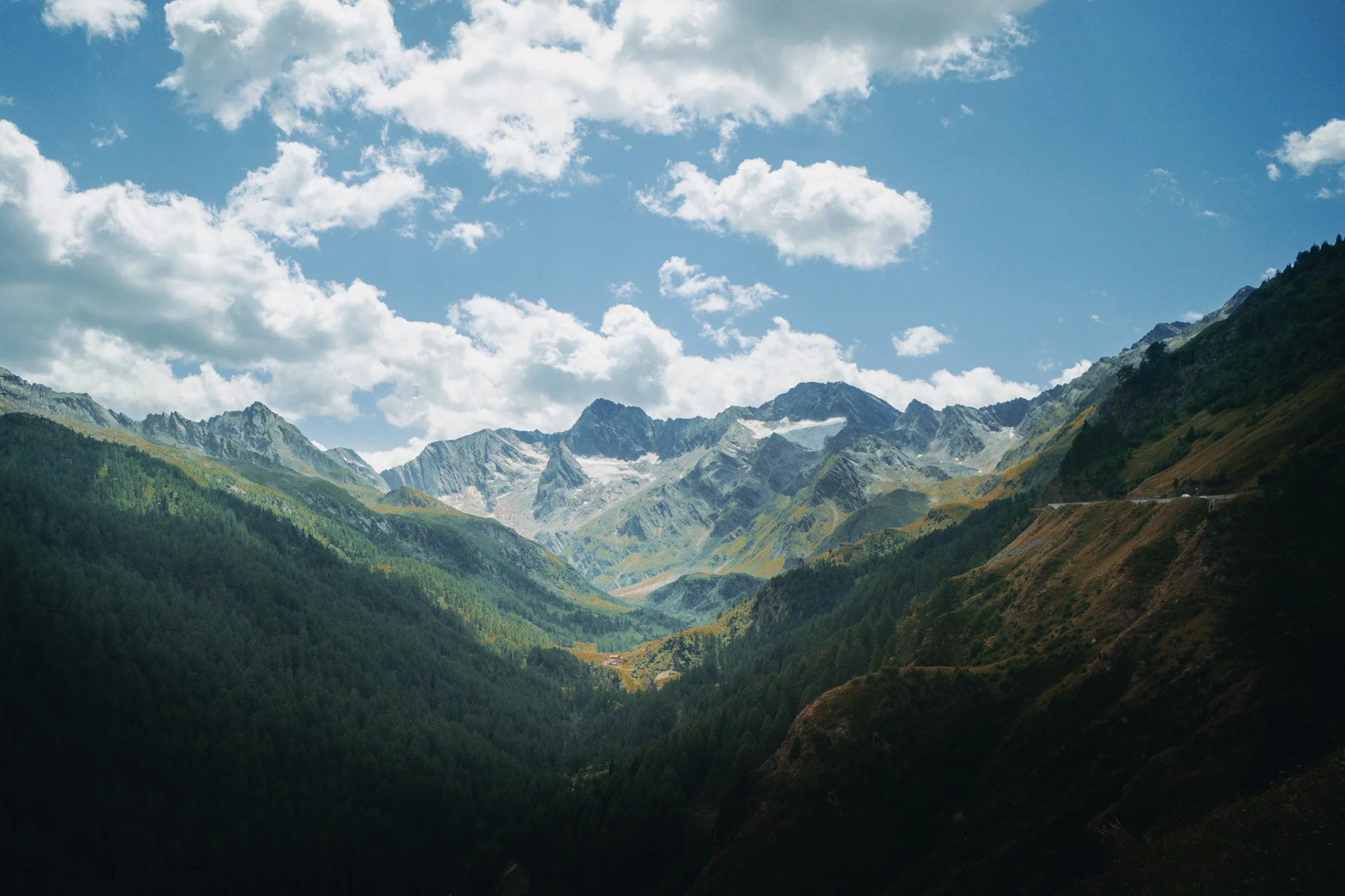
The Ötztaler Radmarathon is a race I have heard about many times. It has always been on my bucket list, but so far I have never managed to get an entry.
I had also crossed the Timmelsjoch by car before, and the two times I was there I knew that one day I wanted to come back and ride it on my road bike.
So when I started looking for routes for Roads to Discover, the Ötztaler came to mind almost straight away.
The official race route starts and finishes in Sölden and takes you across four big Alpine passes: Kühtai, Brenner, Jaufenpass and Timmelsjoch. The official route is around 226 kilometres with roughly 5,500 metres of climbing. Three of those passes take you above 2,000 metres: Kühtai at 2,020 m, Jaufenpass at 2,090 m and Timmelsjoch at 2,474 m.
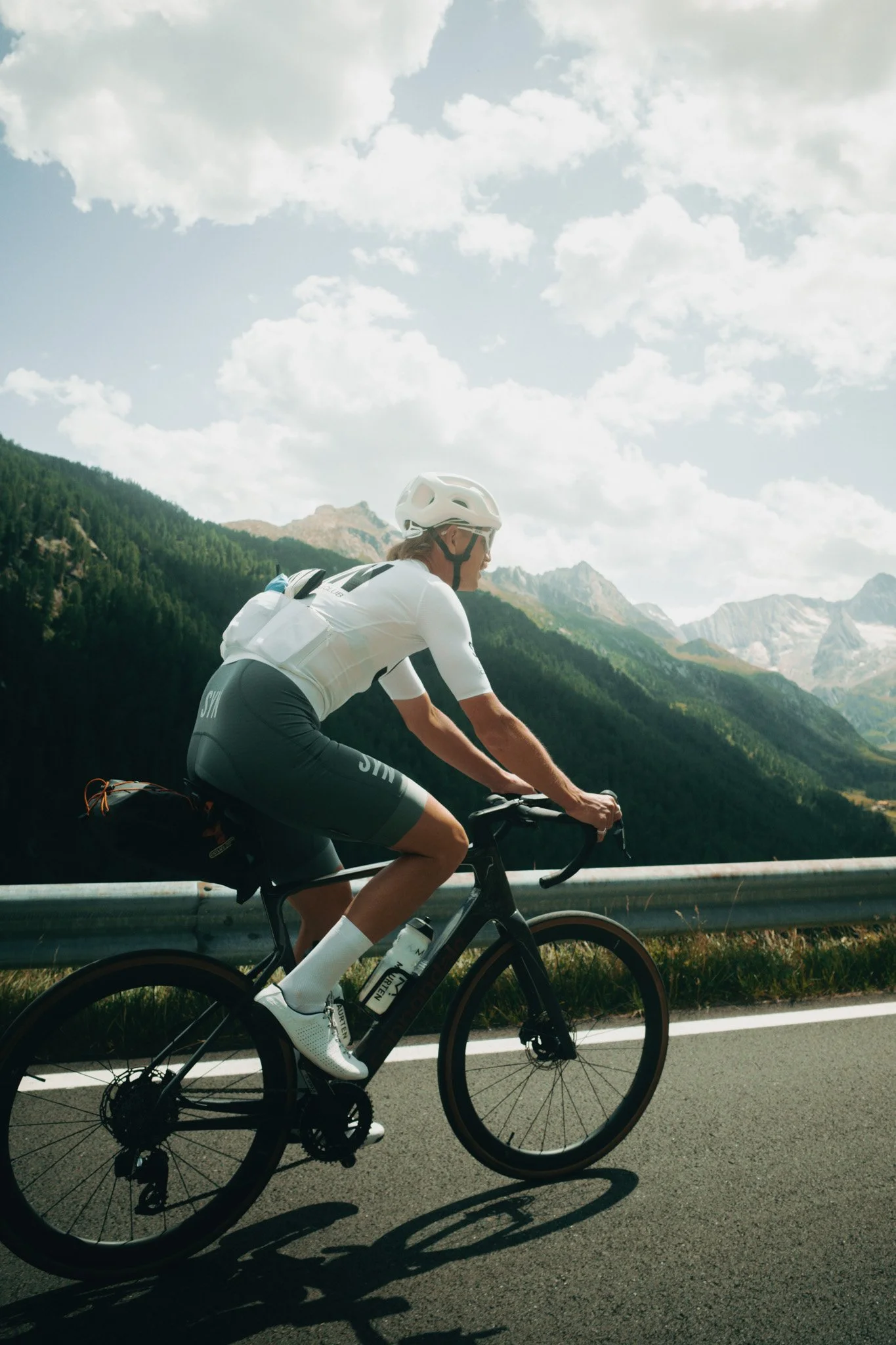
But we weren't here to race it. Instead, we decided to split the route over two days.I wanted to have time to look around, stop for coffee, enjoy the mountains and experience the route without constantly thinking about how quickly we could finish it. I also love strapping a bag to my bike with the bare minimum and finding somewhere to sleep along the way.
For me, that gives an absolute feeling of freedom and adventure.
The route
Start/finish: Sölden, Austria
Our total distance: 236.95 km
Our total climbing: 5,504 m
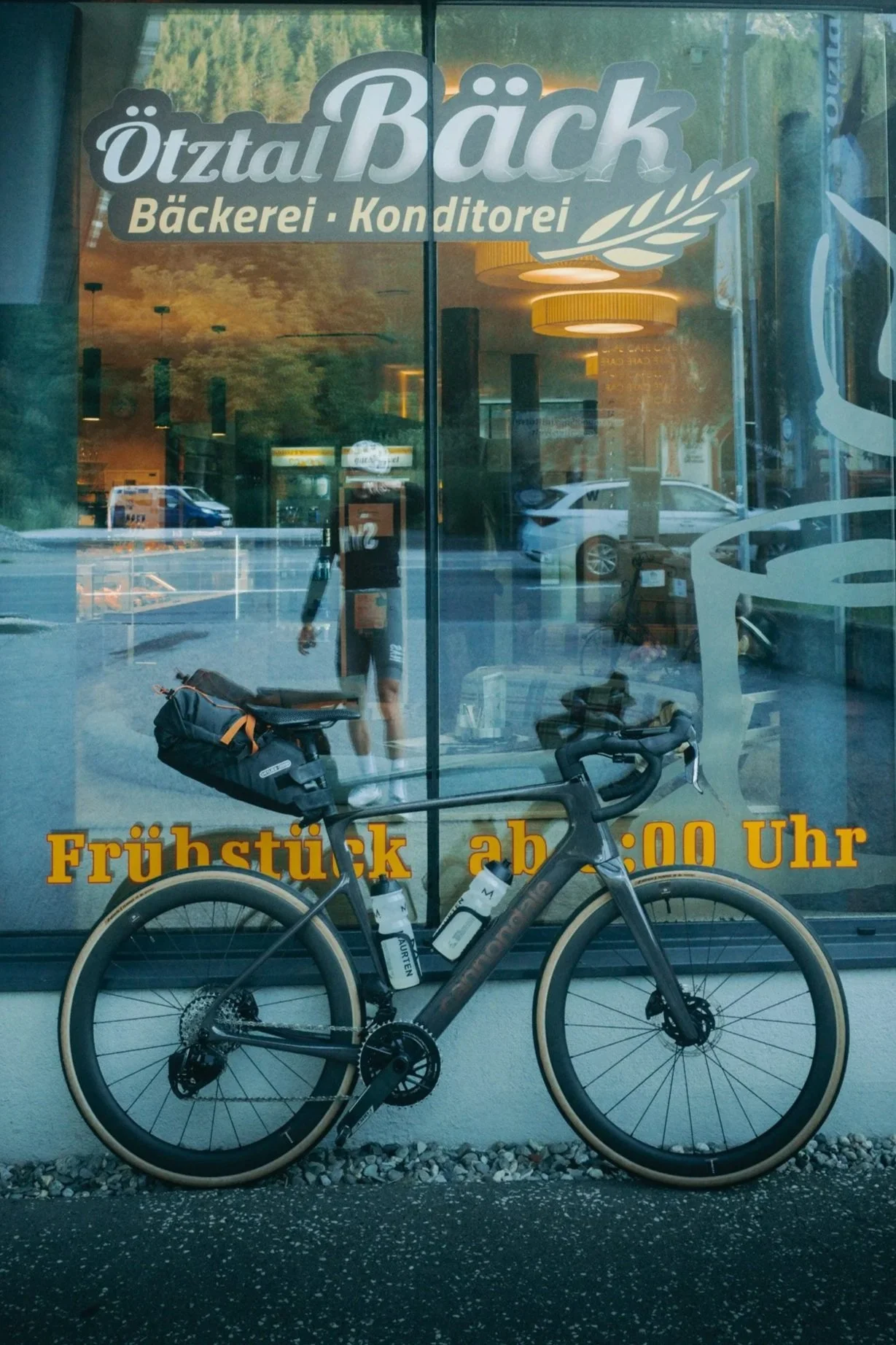
Bike: Cannondale Synapse 2
Bag: Ortlieb Seat-Pack 16L
Our numbers are slightly different from the official race route because of the small detours we made along the way.
The official Ötztaler route follows Sölden – Oetz – Kühtai – Innsbruck – Brenner – Sterzing/Vipiteno – Jaufenpass – St. Leonhard – Timmelsjoch – Sölden.
Day 1 : Sölden - Sterzing
144.44 km — 2,335 m climbing
We stayed at a campsite in Sölden the night before. The morning started fresh. From Sölden, the first hour is mostly downhill, and with the road sitting in the shadow of the mountains it can be pretty cold. Eventually we reached the bottom of Kühtai, where we stopped for a coffee before starting the first real climb of the trip.
Kühtai
Kühtai is a nice mountain to start with.
There are some very steep sections, but they are mixed with easier rolling parts where you can recover a little. From a scenery standpoint I wouldn't say Kühtai is the most unique climb in the Alps, but it definitely has some beautiful sections.
The lake just before the top is one of them.
Another thing I really liked was that the animals weren't all behind fences. Cows and even horses were just roaming around freely on the mountain.
Because we were taking our time, my legs still felt good when we reached the top. But while riding it, I could already imagine how different this climb must feel during the actual race. If you're pushing hard from the beginning, some of those steep sections are going to hurt.
From the summit we started the long descent towards Innsbruck.
And this descent is fun.
It isn't super technical. For a lot of it, you're simply flying down the mountain. At the bottom we found a gas station, stopped for some lunch and filled our bottles.
Nothing fancy. Exactly what we needed.
From there we continued towards Innsbruck.
We made a small deviation from the route because we wanted one thing before starting the Brenner Pass: a proper cup of coffee.
So we stopped at Coffee Lab in Innsbruck, had our coffee and then continued towards climb number two.
The Brenner Pass
The Brenner is a famous crossing of the Alps, but if it wasn't part of the Ötztaler route, I probably wouldn't choose it as a cycling destination on its own.
Still, I really wanted to ride it.
I had crossed the Brenner by car many times before and had often wondered what it would be like to cross it by bike. Now I finally got to find out.
At the top you cross into Italy.
And since we had absolutely no reason to hurry, there was really only one appropriate thing to do.
Stop again.
Coffee in Italy. And tiramisu.
You probably get the point by now. We had plenty of time to stop and enjoy ourselves, and that was exactly the idea behind riding the route in two days.
We eventually finished our first day in Sterzing, or Vipiteno in Italian, after 144.44 kilometres and 2,335 metres of climbing.
We hadn't even booked our hotel before starting the ride. We booked it while we were on the road so that we could stay flexible and decide during the day where we wanted to stop.
For me, that's a big part of the adventure.
Day 2 : Sterzing - Sölden
92.51 km — 3,169 m climbing
If day one felt relatively relaxed, day two was different.
This was where the real work started.
We left early and started climbing the Jaufenpass at around 07:30.
Jaufenpass
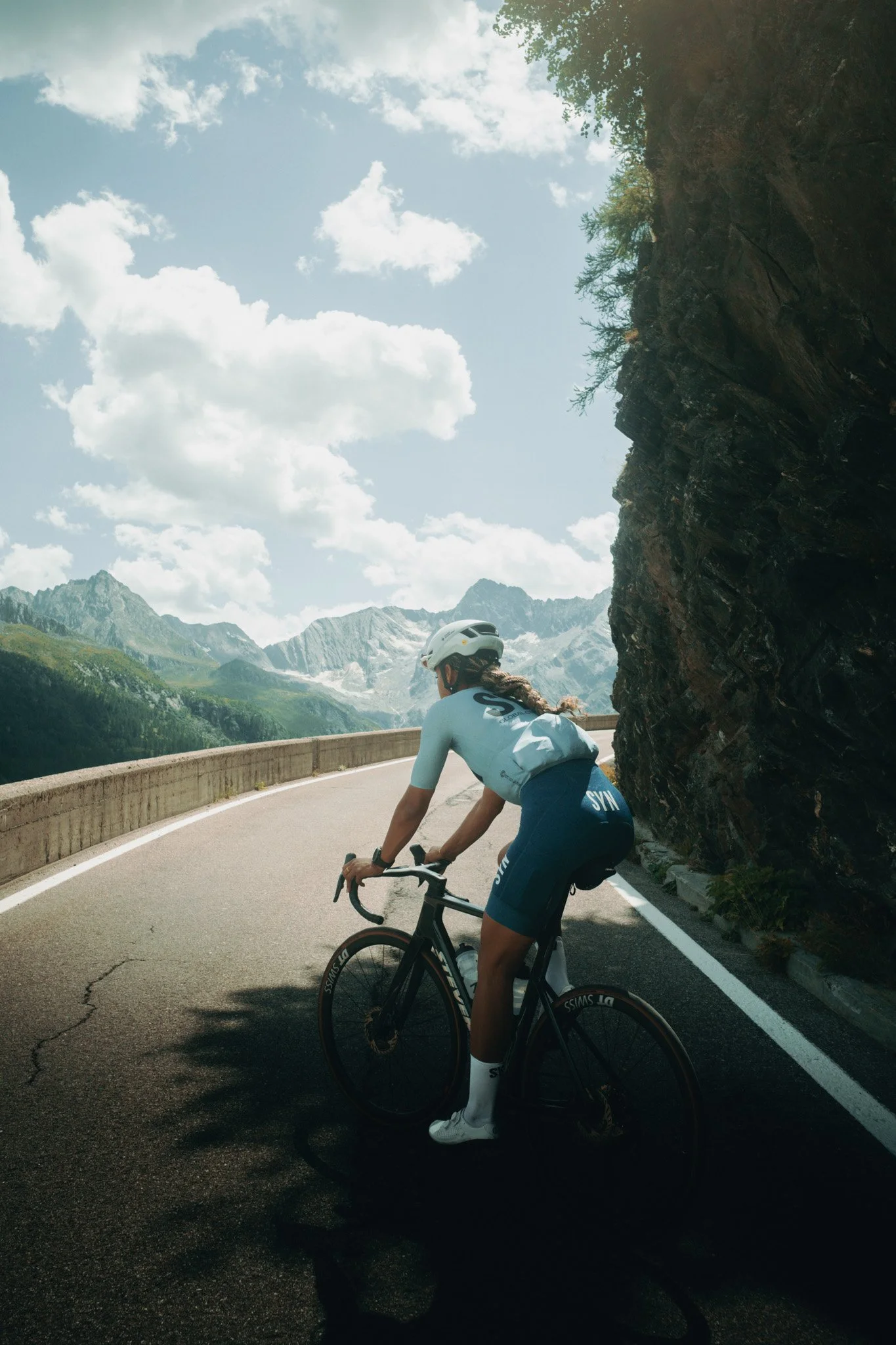
Jaufenpass is a long but beautiful climb.
As you get higher you eventually pass that magical 2,000-metre mark, with the summit sitting at 2,090 metres.
The views are incredible.
But what surprised me was that the other side might have been even more memorable. The descent from Jaufen is long and beautiful, with some fantastic roads and views.
There is also something slightly intimidating about descending that far when you know what's coming next.
Everything you're riding down, you're going to have to climb back up.
And then some.
At the bottom we stopped in St. Leonhard in Passeier at the Dorfcafé. We had lunch, coffee and a big soda before starting the final and hardest climb of the trip.
Timmelsjoch.
Timmelsjoch
The official Ötztaler route climbs around 29 kilometres and 1,724 vertical metres between St. Leonhard and Timmelsjoch.
We started the climb at around 11:45.
By then there were a lot of cars and motorcycles on the road, and the lower part of the climb was completely exposed to the sun.
It was over 30°C there and I was hot.
Really hot.
I think knowing what was still ahead made me suffer even more.
After roughly 20 kilometres of climbing we stopped again. I ordered two big sodas just to get some fluids and sugar in before tackling the final part.
And that final part is something else.
Timmelsjoch is hard, but it is also incredibly unique.
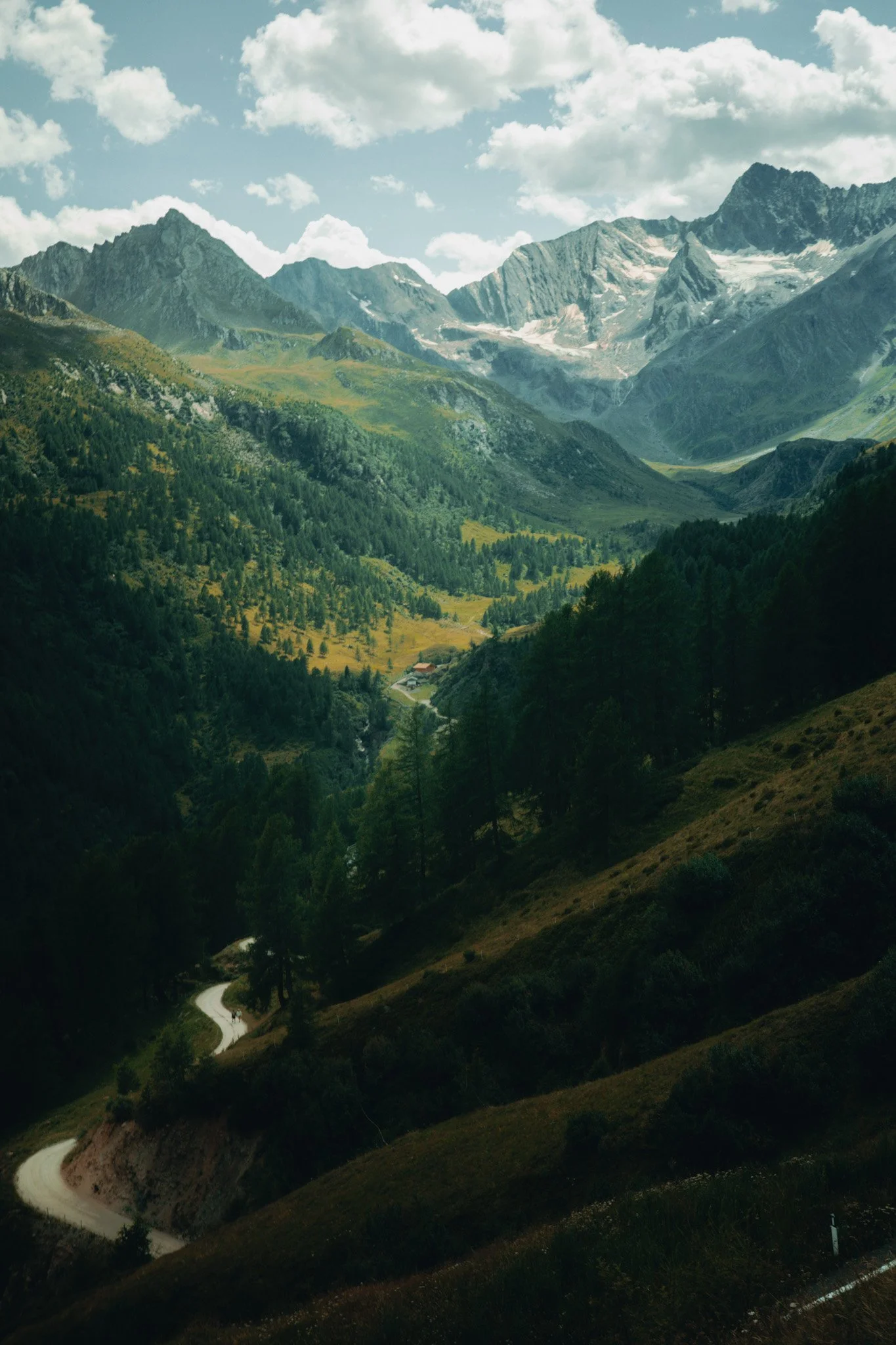
The higher you climb, the more it feels like you're entering a different world. The landscape changes and the views become more and more impressive. The last 10 kilometres in particular are something special.
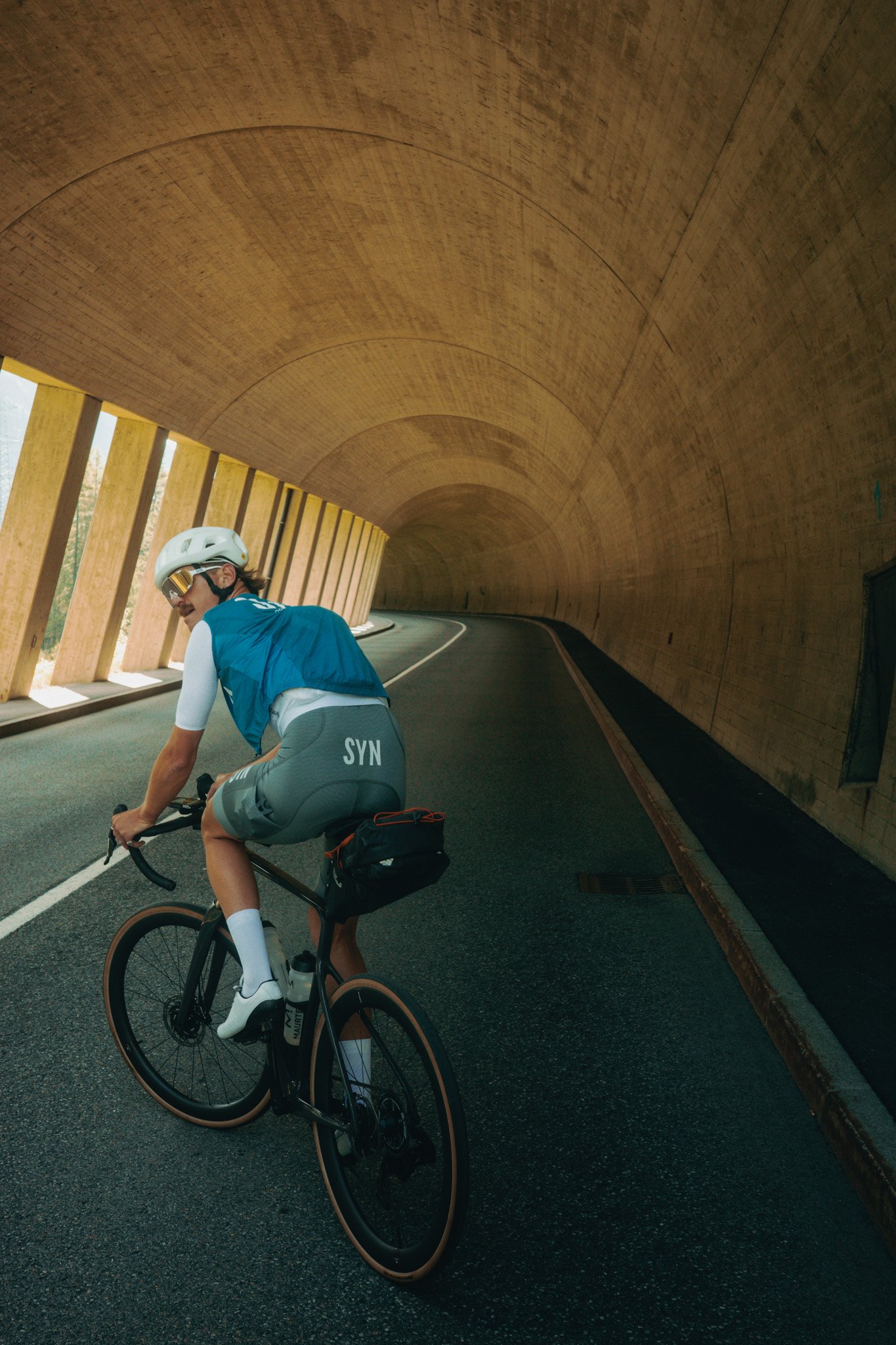
Close to the summit you ride through a long tunnel. You come out the other side and suddenly the view changes again, making that final kilometre towards the top incredibly impressive.
This was the climb I had wanted to ride ever since crossing it by car.
And it didn't disappoint.
Timmelsjoch should be on the bucket list of any cyclist who loves big mountain climbs. It's hard, but the views make all that time and effort worthwhile.
Eventually you reach the summit at 2,474 metres.
And here's one practical tip: bring a jacket.
It had been over 30°C lower down, but at almost 2,500 metres there was a lot of wind and it felt pretty fresh.
The descent back to Sölden
From Timmelsjoch, there is still the ride back towards Sölden.
And what a way to finish.
At times the landscape makes you feel like you're on a different planet. After such a long day and two hard climbs, rolling back towards Sölden gave me goosebumps.
There was no more big mountain waiting for us.
We had done it.
Once we reached Sölden, we found a restaurant that was still open and went for the biggest meal we could find.
Exactly what you need after two days, four Alpine passes and more than 5,500 metres of climbing.
What do you actually need to bring?
Not much.
That is part of what I like about this type of trip.
Before leaving, check the weather forecast carefully and don't just look at the temperature in the valley. Check the expected conditions at the top of the climbs as well. At almost 2,500 metres, Timmelsjoch can feel very different from St. Leonhard far below.
For an overnight trip like this, I would keep the packing list simple:
A jacket for the mountains and descents
One set of normal clothes for dinner
Basic toiletries
Passport
Phone charger
Bike-computer charger
Lightweight shoes or flip-flops
I carried everything in a 16-litre Ortlieb seat pack.
I'd also bring bike lights. The official route information specifically recommends lighting because some of the tunnels can be sparsely lit.
You really don't need to bring your entire wardrobe.
Take the bare minimum and enjoy the freedom of having everything you need strapped to your bike.
Two days or one?
Doing the Ötztaler route in one day would be an incredible challenge.
And after riding the entire route, I want to race the real event even more. I enjoy long, hard days on the bike, and now I know exactly what is waiting for me.
But riding it in two days is a completely different experience.
You have time.
Time to stop at a gas station for lunch. Time to ride into Innsbruck for a good coffee. Time for tiramisu in Italy. Time to look around on Jaufenpass. Time to stop for two enormous sodas when you're suffering on Timmelsjoch.
You're still riding a seriously hard route, but you don't have the stress of trying to finish it as quickly as possible.
For me, putting the bare minimum in a bag, setting off on my road bike and booking somewhere to sleep while already on the road is what makes it feel like a real adventure.
A true Road to Discover
The Ötztaler route is unique.
You cross four major Alpine passes, three of them above 2,000 metres, ride through Austria and Italy, and eventually reach the incredible landscapes of Timmelsjoch.
The views are amazing, the riding is hard, and over two days the whole thing feels like a proper adventure rather than simply a cycling route.
Would I recommend it?
Absolutely — but this is one for experienced cyclists. The official route itself is rated very difficult and involves long, demanding mountain sections.
If big days in the mountains are your thing, this is a route you should experience at least once.
And for me?
I still have unfinished business here.
Next time, hopefully, I'll be standing on the start line of the Ötztaler Radmarathon.
